Skip to content

SmugglingThe Role of the State and E-commerce Platforms

An analysis of transparency and formalization for public policy in Argentina

Download the report

PDF · 64 pages · 2.8 MB

Explore the data

Insight LAC · 2026 Report

Keep reading

Executive summary

Smuggling and illicit trade gained weight on the public agenda during 2025 and 2026, with industry estimates showing a sharp increase in categories such as mobile phones, growing concern among business chambers about unfair competition, and bills on the liability of intermediaries. This report analyses what role those platforms can play and acknowledges that some macroeconomic factors, such as the easing of currency controls and the appreciation of the peso, widened the price gap with other markets, but it focuses on the opportunities the digital channel offers to make transactions transparent and help reduce smuggling.

  1. Part 1 · Market

    The channel grew while brick-and-mortar retail contracted, gaining market share in a year when overall consumption declined.

    Read the full message

    In 2025, Argentine e-commerce turned over 34,033,238 million pesos, with real growth of close to 9%, and added 1.3 million new buyers to reach a base of 25 million people. The channel grew while brick-and-mortar retail contracted, gaining market share in a year when overall consumption declined. That momentum took place within a heterogeneous ecosystem that includes third-party marketplaces, own-store platforms and conversational channels such as Instagram and WhatsApp, each with very different capacities to record information that can be used for tax purposes. Understanding that heterogeneity is a necessary condition for assessing the role of each actor in the economy.

  2. Part 2 · Informality

    Economic informality operates along analytically distinct dimensions (tax, customs, and grey and black markets) that require differentiated policy tools and that e-commerce affects unevenly.

    Read the full message

    With VAT evasion in retail and wholesale trade still among the highest of all measured economic activities, Argentina faces a structural problem that growth cycles have been unable to reverse. Economic informality operates along analytically distinct dimensions (tax, customs, and grey and black markets) that require differentiated policy tools and that e-commerce affects unevenly. The most robust micro-econometric literature available shows that the key driver of tax compliance is not the taxpayer's willingness but the information architecture of the system in which they operate: when a legal regime requires an independent third party to record certain information and report it to the tax authority, there is less room to sustain returns that are inconsistent with that data. Some marketplaces, depending on their architecture and the services they actually provide, can generate records that are relevant for that purpose. However, generating information does not automatically make them parties obliged to report it, withhold taxes or perform enforcement functions: those obligations only exist when an applicable rule expressly establishes them, and within the limits it sets. When it comes to smuggling and grey markets, by contrast, platforms have substantially more limited capacities. Smuggling is a customs phenomenon that, in domestic resale of previously imported goods, may have taken place before the platform ever intervenes, and grey markets may be fostered by distortions in regulatory design (such as tariff gaps and certification or type-approval costs) that listing moderation systems cannot solve on their own. Recognizing that heterogeneity is the necessary condition for building a public policy that makes the most of what the digital channel actually produces without assigning it responsibilities it cannot fulfil.

  3. Part 3 · Public policy

    Argentina's digital channel produces traceability that the State already uses through permanent information regimes, tax withholding and collection, and cooperation mechanisms with platforms.

    Read the full message

    Argentina's digital channel produces traceability that the State already uses through permanent information regimes, tax withholding and collection, and cooperation mechanisms with platforms. This section analyses that regulatory framework, places it within the international comparative debate and proposes four concrete policy lines. The central argument is that smuggling and grey markets are not solved by extending strict or joint liability for third-party conduct to platforms. That approach can blur the division of functions among actors, shift onto private intermediaries enforcement tasks that belong primarily to the State, and have regressive effects on the smallest sellers, without addressing the conditions that make irregular trade possible and profitable. Smuggling is, in essence, a matter of border control and customs intelligence, and its expansion may be fostered by incentives created by regulatory design itself (price gaps, asymmetric tax burdens and type-approval and certification barriers that make the formal channel more expensive). Both dimensions must be addressed at the same time. For the first, the priority is to make better use of the information that existing regimes already produce, linking data from platforms, customs and technical agencies under common interoperability protocols. For the second, the direction is to reduce differential incentives between import regimes, review whether technical requirements are calibrated to the actual risk they seek to mitigate, and promote regional convergence of standards in the categories most affected by irregular trade.

Other figures from the report

  • 15.5%

    Share of the digital channel in retail sales in 2025Source: 5

  • 645million units

    Units sold in 2025Source: 1

  • 5.06%

    Illegal trade as a share of Argentina's GDPSource: 6

Sources

  1. 1CACE, Estudio anual de comercio electrónico Argentina 2025, 2026
  2. 2Insight LAC, Contrabando: el rol del Estado y de las plataformas de e-commerce, 2026
  3. 3INDEC, ARCA y CACE, Contrabando: el rol del Estado y de las plataformas de e-commerce, 2026
  4. 4INDEC, Accesos residenciales a internet: Informes técnicos, Vol. 9, N° 300, tercer trimestre 2025, 2025
  5. 5Insight LAC, Estimación propia, ver metodología en Anexo metodológico, 2026
  6. 6ASIPI, Estudio sobre el impacto de la falsificación y el contrabando en el desarrollo económico y social de América Latina, 2025

Part 1. Size and economic contribution of digital commerce

The channel grew while brick-and-mortar retail contracted, gaining market share in a year when overall consumption declined.

Explore the data

E-commerce as a share of total retail sales by country, latest available year (percent)

Argentina, Chile and Mexico already show penetration close to that of Spain or Australia.

Download
E-commerce as a share of total retail sales by country, latest available year (percent)
CountryE-commerce / retail sales (%)Year
Netherlands32.862024
Czech Republic30.362024
United Kingdom27.22024
Denmark23.882024
United States19.62024
Germany17.62024
Argentina13.822023
Chile12.32024
Mexico12.022023
Spain11.692024
Australia11.42024
France10.342024
Italy10.012024
Canada62024
Colombia5.382020
Luxembourg1.422024

Source: UNCTAD, Banco Central de Chile, INDEC, ARCA y CACE, Contrabando: el rol del Estado y de las plataformas de e-commerce, 2026

Source: UNCTAD, Banco Central de Chile, INDEC, ARCA y CACE, Contrabando: el rol del Estado y de las plataformas de e-commerce, 2026

Note: the estimate for Argentina tends to overstate the penetration of the digital channel in retail sales. It was built from the weight of the retail channel in total trade and from the sales recorded by AFIP in 2023. In other words, informal trade at physical stalls is left out of the calculation. For more detail, see the methodological note in the Annex. See the full methodology

E-commerce revenue in Argentina, 2016-2025, in current pesos and in constant June 2026 pesos

In current pesos, revenue only goes up. In constant pesos, the 2024 drop and the 2025 recovery become visible.

Download
E-commerce revenue in Argentina, 2016-2025, in current pesos and in constant June 2026 pesos
YearCurrent (million pesos)Constant (million pesos)
2016102,70013,480,988.413
2017156,30016,342,011.897
2018229,76017,889,136.495
2019403,27820,426,223.48
2020905,14332,293,231.274
20211,520,00036,559,946.865
20222,846,00039,723,836.026
20237,829,00046,837,502.662
202422,025,46241,218,038.174
202534,033,23844,886,042.436

Source: CACE (series anuales; valor 2025 según Estudio Anual definitivo, marzo de 2026) e INDEC, Contrabando: el rol del Estado y de las plataformas de e-commerce, 2026

Source: CACE (series anuales; valor 2025 según Estudio Anual definitivo, marzo de 2026) e INDEC, Contrabando: el rol del Estado y de las plataformas de e-commerce, 2026

Note: values in million pesos. Constant June 2026 pesos, deflated with INDEC's CPI (annual average).

Physical units sold through e-commerce in Argentina, 2016-2025, with year-on-year growth rate

After slowing to 16% in 2023 and 3% in 2024, units sold grew 28% in 2025 and reached 645 million.

Download
Physical units sold through e-commerce in Argentina, 2016-2025, with year-on-year growth rate
YearUnits sold (millones)Year-on-year change (%)
201675No data
20179628
201812025
201914621.667
202025171.918
202138151.793
202242210.761
202348915.877
20245043.067
202564527.976

Source: CACE, series anuales, Contrabando: el rol del Estado y de las plataformas de e-commerce, 2026

Source: CACE, series anuales, Contrabando: el rol del Estado y de las plataformas de e-commerce, 2026

Share of the digital channel in total Argentine retail trade, 2018-2025

The digital channel's share of retail trade went from 7.0% in 2018 to an estimated 15.5% in 2025.

Download
Share of the digital channel in total Argentine retail trade, 2018-2025
YearE-commerce / retail sales (%)Data type
20186.976Observed
20197.438Observed
202011.444Observed
202111.272Observed
202211.434Observed
202313.818Observed
202413.028Estimated
202515.467Estimated

Source: CACE, ARCA, INDEC, Contrabando: el rol del Estado y de las plataformas de e-commerce, 2026

Source: CACE, ARCA, INDEC, Contrabando: el rol del Estado y de las plataformas de e-commerce, 2026

Note: the data shown for 2024 and 2025 are a less robust estimate than earlier years, since the level of sales recorded by ARCA for those years is not yet available. For that reason, there are discrepancies between the reported level and the overall movement of the e-commerce channel relative to in-store sales. See the full methodology

Share of payment methods by sales channel, 2019, 2024 and 2030 estimate

Digital wallets are gaining ground on cash in both channels.

Download
Share of payment methods by sales channel, 2019, 2024 and 2030 estimate
Payment method2019 · E-commerce2019 · In-store point of sale2024 · E-commerce2024 · In-store point of sale2030 (proj.) · E-commerce2030 (proj.) · In-store point of sale
Digital wallets20 %4 %34 %25 %48 %39 %
Transfers (A2A)8 %No data14 %8 %19 %17 %
BNPL / financing0.5 %No data1 %1 %1 %1 %
Cryptocurrencies0.5 %No data1 %No data2 %No data
Credit cards47 %28 %27 %20 %18 %15 %
Debit and prepaid10 %14 %19 %21 %12 %13 %
Cash16 %54 %4 %25 %1 %16 %

Source: Worldpay, The Global Payments Report 2025, Contrabando: el rol del Estado y de las plataformas de e-commerce, 2026

Source: Worldpay, The Global Payments Report 2025, Contrabando: el rol del Estado y de las plataformas de e-commerce, 2026

Note: share of transaction value. 2030 is a Worldpay projection. "n/a": no data reported by the source. For BNPL and cryptocurrencies in 2019 the source reports "less than 1%" (entered as 0.5%). In e-commerce, "Cash" includes cash on delivery, prepaid and postpaid (e.g. Rapipago, Pago Fácil). Totals may not add up to 100% due to rounding. The 2019 data match The Global Payments Report 2020, p. 49.

Foreign platforms used by Argentine consumers, 2024 and first half of 2025

Temu and Shein appear in the first half of 2025, while AliExpress and Amazon lose share and Mercado Libre stays in the lead.

Download
Foreign platforms used by Argentine consumers, 2024 and first half of 2025
Platform2024 (%)2025 (1er semestre) (%)
Mercado Libre3733
AliExpress / Alibaba3315
Amazon3213
TemuNot surveyed10
SheinNot surveyed8
Tiendamia135

Source: CACE, fase de demanda (Informe Anual 2024 y Reporte MID 1er semestre 2025), Contrabando: el rol del Estado y de las plataformas de e-commerce, 2026

Source: CACE, fase de demanda (Informe Anual 2024 y Reporte MID 1er semestre 2025), Contrabando: el rol del Estado y de las plataformas de e-commerce, 2026

Note: percentage of cross-border buyers who used each platform (multiple answers allowed). "–": platform not surveyed in that period.

Courier regime as a share of total monthly imports, 2017-2026

After the late-2024 reform, the courier regime multiplied its weight in imports.

Download
Courier regime as a share of total monthly imports, 2017-2026
MonthCourier share (%)Courier regime imports (USD CIF)Total imports (USD CIF)
2017-010.3816,496,9064,344,116,346.1
2017-020.32613,431,1204,117,168,659.57
2017-030.34719,006,9425,474,983,304.66
2017-040.33616,728,3294,973,102,455.77
2017-050.34320,791,4866,064,320,592.45
2017-060.36321,391,6415,898,148,214.69
2017-070.35221,283,2696,042,736,144.12
2017-080.31920,142,3506,316,731,961.31
2017-090.30418,163,3795,968,347,664.56
2017-100.3219,894,603.166,209,134,068.15
2017-110.3119,122,3776,163,364,678.63
2017-120.32917,643,2495,365,930,590.37
2018-010.26415,137,1105,743,263,920.64
2018-020.26113,539,4435,195,980,216.67
2018-030.26816,012,5585,978,949,641.4
2018-040.24815,145,8176,105,585,065.03
2018-050.23715,261,6126,448,000,549.65
2018-060.32517,728,9375,461,019,358.93
2018-070.31419,409,9296,182,401,023.98
2018-080.33120,914,3726,314,301,003.03
2018-090.36817,292,4594,699,954,629.48
2018-100.36918,731,0735,073,473,681.8
2018-110.4218,330,9174,363,012,179.56
2018-120.49519,405,7133,916,873,146.04
2019-010.42417,850,7834,211,806,806.06
2019-020.41916,764,4023,997,937,446.12
2019-030.49619,630,0113,956,312,730.37
2019-040.43318,081,7204,172,281,633.26
2019-050.44720,742,0214,644,788,721.43
2019-060.47819,953,0074,171,391,805.51
2019-070.40719,953,0074,905,297,840.78
2019-080.47220,751,9344,400,094,181.16
2019-090.43717,502,8714,001,941,805.05
2019-100.47719,644,4394,121,430,240.42
2019-110.53818,343,8743,408,682,182.44
2019-120.59618,688,1733,133,064,583.35
2020-010.43915,511,5743,535,433,846.82
2020-020.45614,559,8763,191,224,227.54
2020-030.46414,635,3183,154,187,947
2020-040.40311,653,3772,894,419,334.64
2020-050.59418,812,1793,165,928,248.6
2020-060.929,688,2763,299,306,998.87
2020-071.08737,520,6833,450,789,540.23
2020-081.1440,006,4153,508,213,986.43
2020-091.03742,801,7394,128,994,107.58
2020-101.02240,920,2684,004,440,945.13
2020-110.94438,831,6814,114,756,508.27
2020-120.84933,178,7803,907,941,187
2021-010.79330,460,4553,843,547,388.08
2021-020.89533,242,3443,712,676,594.16
2021-030.8243,610,3165,320,171,567.68
2021-040.9142,526,6604,672,807,130.7
2021-050.96649,680,6235,141,001,653.31
2021-060.89853,061,5325,908,781,472.25
2021-070.8649,181,0915,715,438,377.69
2021-080.94254,174,6325,753,643,988.37
2021-090.93354,895,0065,885,682,051.41
2021-101.03454,249,8365,247,232,136.26
2021-110.90552,208,7735,767,036,041.6
2021-120.73545,715,8346,215,735,003.19
2022-010.91347,953,348.585,251,293,605.7
2022-020.81846,123,643.835,638,666,895.54
2022-030.7955,992,004.797,083,885,455.87
2022-040.81956,413,321.876,889,294,933.55
2022-050.79662,806,428.297,891,525,484.09
2022-060.6657,190,975.468,666,663,101.03
2022-070.59849,642,540.028,301,619,835.06
2022-080.83866,358,647.517,917,870,955.72
2022-090.78756,221,452.317,143,961,421.78
2022-100.5332,298,519.756,088,905,782.33
2022-110.44225,560,255.065,778,030,410.75
2022-120.59930,500,841.315,088,658,477.28
2023-010.60632,497,174.965,366,591,529.63
2023-020.6532,706,436.995,031,002,877.83
2023-030.57739,491,322.136,843,804,015.87
2023-040.61437,513,041.766,110,069,870.68
2023-050.52638,956,768.57,406,214,481.06
2023-060.55340,092,829.377,252,025,906.6
2023-070.6141,188,702.46,754,197,482.61
2023-080.641,397,852.756,898,735,338.27
2023-090.60739,569,109.266,520,377,024.34
2023-100.68239,871,398.545,849,301,356.42
2023-110.71539,441,362.515,517,437,042.24
2023-120.7732,871,954.764,266,476,294.19
2024-010.36516,805,063.884,603,954,647.22
2024-020.31613,011,601.964,118,057,431.99
2024-030.3213,860,931.644,331,570,772.83
2024-040.35316,620,002.394,704,521,379.08
2024-050.35317,705,108.895,012,117,413.83
2024-060.3616,867,285.434,687,448,504.67
2024-070.33419,150,387.175,727,054,468.16
2024-080.42820,893,562.114,882,940,944.87
2024-090.30918,452,117.45,970,958,705.49
2024-100.38723,704,907.576,120,463,794.53
2024-110.46224,251,142.625,249,072,092.84
2024-120.737,551,718.95,367,411,413.89
2025-010.76443,973,222.595,752,750,161.51
2025-020.68240,013,308.135,864,287,560.64
2025-030.76546,069,650.666,018,847,975.59
2025-040.77750,165,860.326,459,959,189.14
2025-050.96362,469,059.396,487,970,008.92
2025-061.12571,944,621.56,395,910,119.81
2025-071.36893,743,966.286,853,671,650.11
2025-081.41591,478,677.966,462,720,701.49
2025-091.418101,960,897.87,191,133,461.86
2025-101.29392,429,973.147,149,970,997.52
2025-111.6994,602,9975,597,992,481.29
2025-121.89105,004,381.045,555,904,923.46
2026-011.78890,405,459.595,056,670,157.25
2026-021.75890,818,979.255,166,573,882.13
2026-031.681102,783,412.826,115,895,278.3
2026-041.908118,330,413.526,203,139,713.68
2026-051.879115,173,256.876,128,026,459.79
2026-061.823125,074,638.146,861,137,527.43

Source: INDEC, Comercio exterior (microdatos de importaciones), Contrabando: el rol del Estado y de las plataformas de e-commerce, 2026

Source: INDEC, Comercio exterior (microdatos de importaciones), Contrabando: el rol del Estado y de las plataformas de e-commerce, 2026

Note: courier regime = NCM heading 9998.04.00. CIF values in US dollars.

Regulatory milestones

Publication dates in the Official Gazette.

Part 2. The problem of informality and the opportunity of e-commerce

Economic informality operates along analytically distinct dimensions (tax, customs, and grey and black markets) that require differentiated policy tools and that e-commerce affects unevenly.

2.1 The problem of informality and its many faces

Types of informality and illegality in an economy

Informality essentially consists of a set of income-generating activities that are not regulated by the State. However, every actor experiences negative consequences from this problem.

The three types of informality

Three analytically independent dimensions that overlap in practice. The numbers mark the overlaps stated in the report; tap each dimension to see its categories and the legislation that covers them.

Download
Tax informality

Relationships in the diagram

  • Registered, but in a grey market

What it is

Failure to meet registration, invoicing or filing obligations: the economic unit is not registered in the tax regime that corresponds to its activity, remains in a category that does not reflect its level of operations, or fails to meet its invoicing and filing obligations.

Legislation (non-exhaustive) that includes formality requirements

Tax Procedure Law 11,683 (registration and filing obligations before ARCA), Law 24,977 on the Simplified Regime (Monotributo), rules of the General VAT and Income Tax Regime, possibly General Companies Law 19,550

Level in Argentina

VAT evasion went from 60% of potential revenue in 2017 to 42% in 2023. Source: Centro de Estudios Tributarios, Universidad Austral, 2025.

Customs irregularity

Relationships in the diagram

  • From smuggling to the grey market

Smuggling (customs offence)

What it is

Bringing goods in or out through artifice or deception that prevents or hinders control by the customs service: concealment, use of unauthorized crossings, false documentation or other manoeuvres aimed at evading duties, prohibitions or restrictions. What defines smuggling is the intent to evade control, not the type of product: it may involve genuine or counterfeit goods, permitted or prohibited. When the value of the goods does not exceed the threshold set by law, the conduct is treated as minor smuggling and penalized as an administrative infraction, not as a crime.

Legislation (non-exhaustive) that includes formality requirements

Customs Code, Law 22,415, articles 863 to 876 (smuggling offence) and article 947 (minor smuggling)

Customs infractions (customs irregularity)

What it is

Failure to meet customs obligations without the artifice or deception that characterizes smuggling. It includes inaccurate declarations of the quantity, quality, value, origin or tariff classification of goods, failure to meet the conditions of regimes such as temporary importation, and breaches of formal obligations. Under-invoicing, for example, is usually treated as an inaccurate declaration. It may result from error, negligence or deliberate conduct that does not amount to smuggling, and it is penalized administratively, mainly with fines. All smuggling is a customs irregularity, but not every customs irregularity is smuggling.

Legislation (non-exhaustive) that includes formality requirements

Customs Code, Law 22,415, Section XII, Title II (customs infractions), including inaccurate declaration (article 954)

Level in Argentina

Illegal trade accounts for 5.06% of Argentina's GDP. Source: ASIPI, 2025.

Product markets (grey and black)

Relationships in the diagram

  • Registered, but in a grey market
  • From smuggling to the grey market
  • Grey market without smuggling

Prohibited or restricted goods (black market)

What it is

Goods whose production, import, possession, distribution or sale is prohibited, or subject to a special control regime for reasons of security, health or public order. The illegality stems from a prohibition or restriction on the product itself, not from the channel through which it is sold or the seller's tax status. Depending on the product, the prohibition may be absolute (the good cannot be sold at all, as with narcotics) or relative (it can only be sold with specific authorizations and through authorized channels, as with firearms or prescription drugs). Lawful goods that do not meet general technical or regulatory requirements, such as type approvals or certifications, are not part of this category.

Legislation (non-exhaustive) that includes formality requirements

Criminal Code; Law 23,737 on narcotics; Law 20,429 on firearms and explosives; Law 16,463 on medicines, as applicable

Counterfeit products (black market)

What it is

Goods that reproduce, imitate or use without authorization trademarks, distinctive signs, designs or other elements protected by intellectual property rights, so that they are presented as, or may be perceived as, original products or products linked to their legitimate owner. Unlike prohibited goods, the type of product may be perfectly lawful: the illegality stems from the counterfeiting, the unauthorized use of third-party rights or the misrepresentation of the origin or authenticity of the good.

Legislation (non-exhaustive) that includes formality requirements

Trademark Law 22,362

Intellectual Property Law 11,723 and Decree-Law 6673/63 on Industrial Models and Designs, as applicable

Sale of genuine products outside official distribution networks (grey market in the strict sense)

What it is

Sale of genuine products outside the distribution networks that are official or authorized by the manufacturer. What makes it "grey" is the sales channel: the product is authentic, but it is sold by actors that are not part of the brand's official distribution network. This dimension is independent of tax, customs and regulatory compliance. A product sold on the grey market may have been imported legally, with the corresponding duties paid, and meet all the technical or health requirements that apply in the local market. At the same time, the grey market may overlap with other forms of irregularity. For example, a genuine product sold outside the official network may have entered through smuggling or may lack the type approval, electrical certification, health registration or other authorization required for its sale.

Legislation (non-exhaustive) that includes formality requirements

There is no specific public regulation: it is governed by private agreements (for example, contracts with official distributors)

Sale of products without regulatory clearance (grey market in the broad sense)

What it is

Often called "grey markets", this covers the sale of genuine products in a lawful category that do not meet one or more of the regulatory requirements for sale in the local market. These requirements may include technical type approvals, safety or energy-efficiency certifications, health registrations or authorizations, mandatory labelling or other conditions set by sector regulation. The irregularity does not stem from the nature of the product or from a general ban on selling it, but from the failure to meet a regulatory condition needed for its legal sale. It also differs from the grey market in the strict sense, since a product can be sold outside the manufacturer's official network and still meet local regulatory requirements, or be sold by an authorized distributor and still show some regulatory non-compliance.

Legislation (non-exhaustive) that includes formality requirements

ENACOM type approval: Argentina Digital Law 27,078 and Resolution 57/2026

Electrical safety certification: SIC Resolution 16/2025

Toy safety certification: Resolutions 163/2005 and 313/2025

Auto parts certification: Law 24,449 and Decree 196/2025

Health authorization for food, supplements and cosmetics: Law 18,284 (Argentine Food Code) and ANMAT regulations

Level in Argentina

The report does not give a level for this dimension.

Where they overlap
  1. Registered, but in a grey market. A productive unit may be registered and meet its tax obligations, yet sell products outside the distribution network authorized by the manufacturer, operating in the so-called grey market.

  2. From smuggling to the grey market. …a good that was smuggled in may later be sold through unofficial distribution channels (grey market).

  3. Grey market without smuggling. …a genuine and lawful product may be sold through a grey market without having breached any customs rule when it entered the country.

Source: Insight LAC, elaboración propia (Tabla 1), Contrabando: el rol del Estado y de las plataformas de e-commerce, 2026

Source: Centro de Estudios Tributarios, Universidad Austral, Diagnóstico de informalidad de la economía en Argentina, Informe N°3, 2025

Source: ASIPI, Estudio sobre el impacto de la falsificación y el contrabando en el desarrollo económico y social de América Latina, 2025

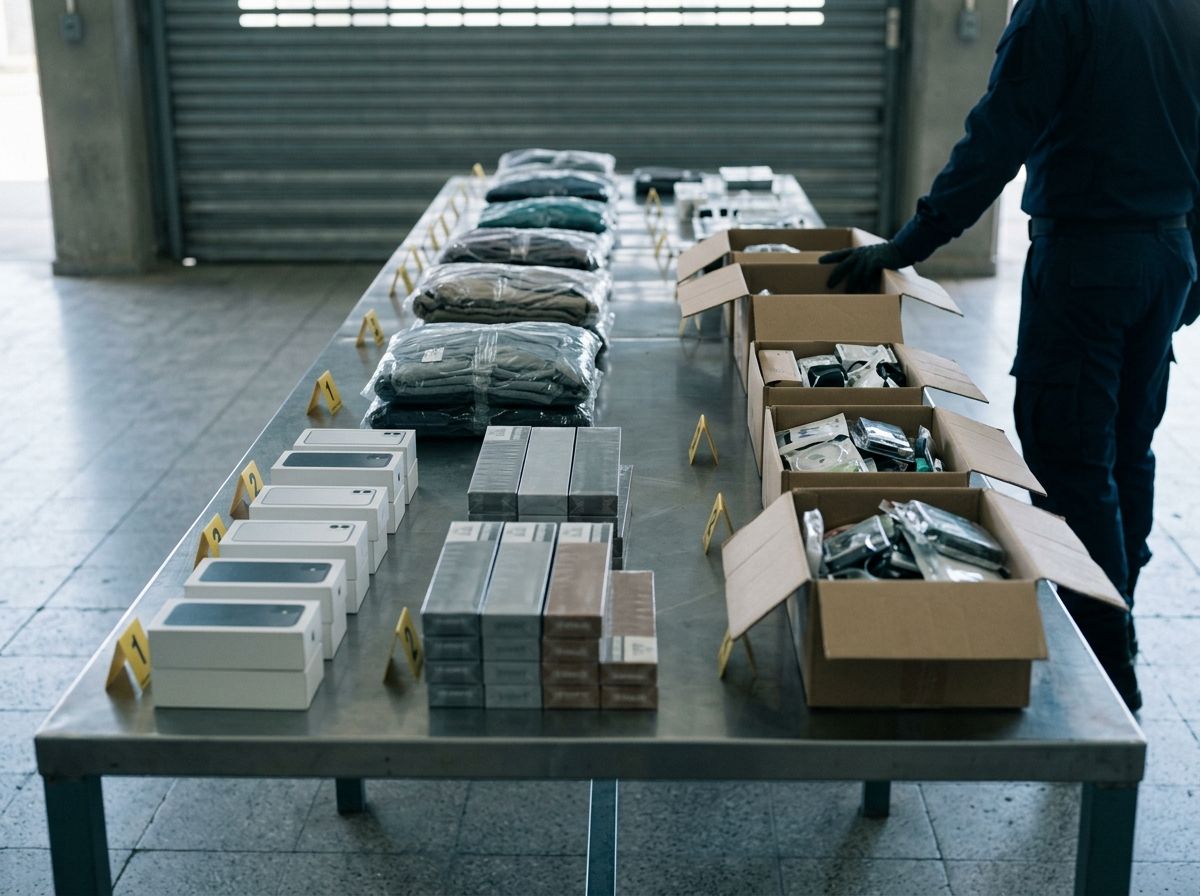
Seized goods laid out on an inspection table at a customs checkpoint: phones, cigarettes and clothing.

Illegal trade and smuggling

What defines smuggling is the intent to evade control, not the type of product: it may involve genuine or counterfeit goods, permitted or prohibited.

Illegal trade as a share of GDP

ASIPI's estimate of counterfeiting and smuggling, to scale: each square is 1% of Argentina's GDP.

Download

Illegal trade5.06%of Argentina's GDP

Each square is 1% of GDP

With documented impact on sectors such as apparel, electronics and tobacco.

ASIPI estimate (2025) of counterfeiting and smuggling. The report does not state which year it refers to.

Source: ASIPI, Estudio sobre el impacto de la falsificación y el contrabando en el desarrollo económico y social de América Latina, 2025

When a legal regime requires an independent third party to record certain information and report it to the tax authority, there is less room to sustain returns that are inconsistent with that data.

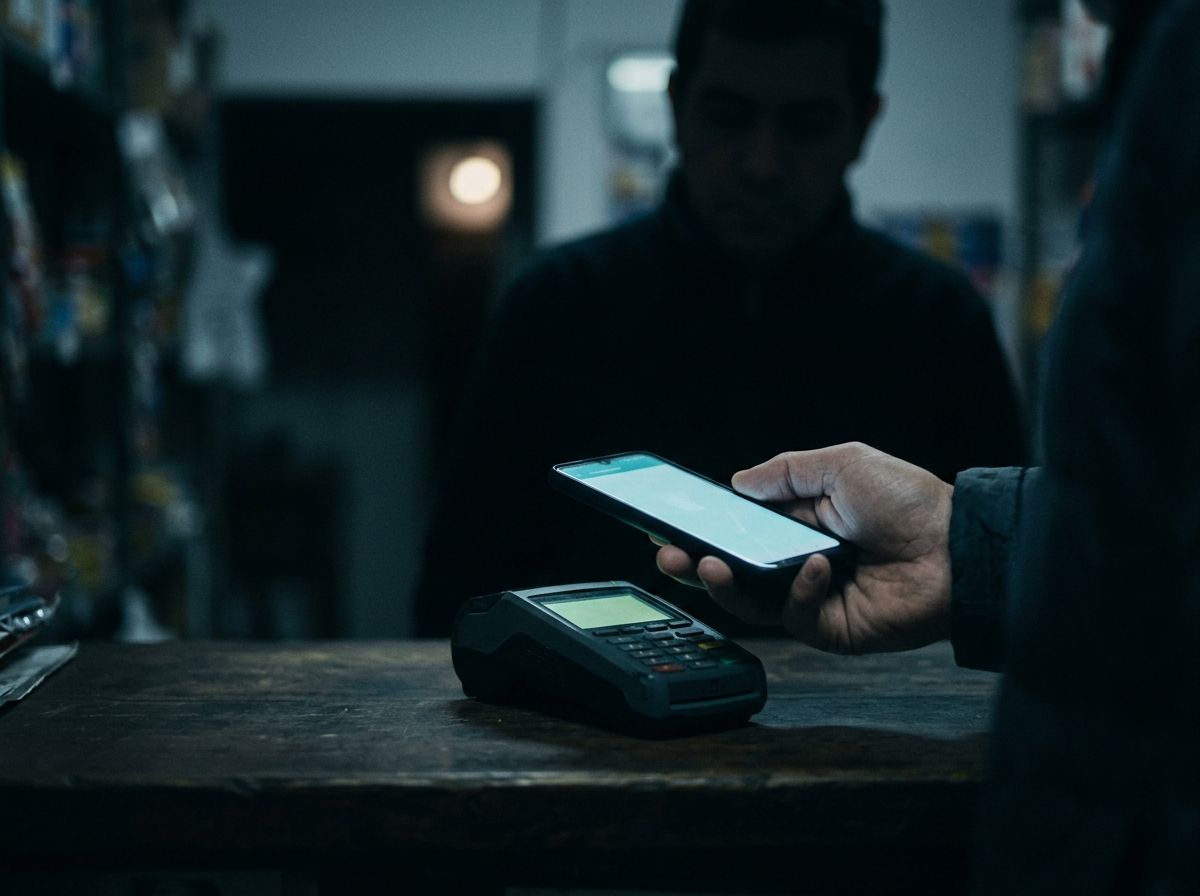
A phone payment on a card terminal at a shop counter.

2.2 Challenges and opportunities of e-commerce in the face of economic informality

Recent studies providing evidence on the role of intermediaries in third-party tax compliance

Unlike a transaction carried out entirely in cash or through an unrecorded channel, some platforms keep data on the activities carried out within their systems, whose scope depends on their architecture and the services they actually provide.

International evidence on intermediaries and tax compliance

Six studies on the role of intermediaries in third-party tax compliance: five experiments in specific countries and one regional survey, the only one that measures the direct effect of e-commerce platforms.

Download
Denmark
2011

Main result

The evasion rate for income subject to reporting by an independent third party is close to zero.

For self-reported income it is substantially higher. The difference does not depend on the taxpayer's ethical preferences but on the information architecture of the system: when there is a third party that reports, the taxpayer cannot sustain an inconsistent return without being automatically exposed.

Related toCosta Rica
Chile
2015

Main result

The paper trail that firms require from one another in order to claim tax credits generates compliance effects along the chain.

The effect weakens at the last link (sale to the final consumer) because the buyer has no direct incentive to ask for an invoice, which creates a structural break in traceability at that stage.

Pakistan
2015

Main result

Countries with weak enforcement capacity use turnover-based rather than profit-based taxation precisely so they can rely on third-party reporting, which is observable and verifiable even when net profits are not.

The traceability mechanism partly substitutes for direct audit capacity.

Brazil
2019

Main result

Turning the final consumer into a voluntary verifier of the transaction produced an increase of at least 21% in the revenue reported by firms.

The mechanism complements third-party reporting by closing the break at the final link of the chain identified by Pomeranz.

Related toChile
Costa Rica
2022

Main result

The introduction of a third-party withholding regime in Costa Rica produced observable improvements in tax compliance, extending the evidence of the Kleven–Pomeranz line to middle-income economies with developing tax institutions.

Related toDenmarkChile
South Asia
2023Regional case · survey

Main result

Joining the digital channel increases firms' incentive to register formally, by increasing their visibility to the tax authorities.

Firms that have been on the platform longer are more likely to experience that impact, which suggests that the formalization associated with the digital channel is a cumulative process. It is one of the studies identified in this review that directly measures the effect of e-commerce platforms on the formalization of informal sellers.

Source: Insight LAC, elaboración propia (Tabla 2), Contrabando: el rol del Estado y de las plataformas de e-commerce, 2026

2.3 Scope and limits of e-commerce traceability against smuggling and illegal and grey markets

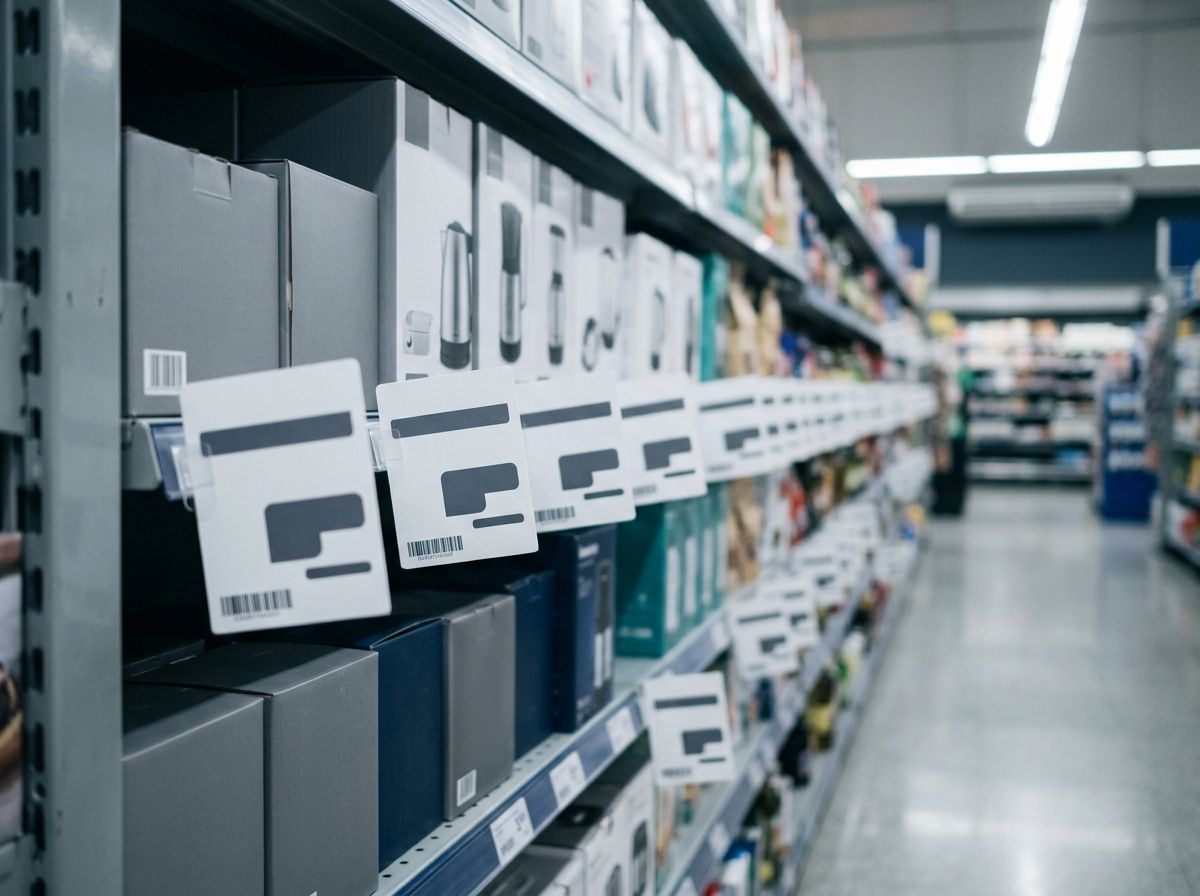
Price tags lined up on a supermarket shelf.

Price gaps and smuggling

Taken together, these studies show that regulatory design and the incentive structure are relevant dimensions for explaining irregular trade, although they do not fully account for a phenomenon in which institutional, logistical and criminal factors also play a part.

Price gaps and smuggling

Each figure measures something different (share, price gap, tax burden, sales channel), so each one gets its own panel, with its unit and source.

Download
Mobile phones
  • Share of smuggling in the mobile phone market

    From 7% to 35%

    These figures, released through a press article without public access to the full report or its methodology, should be read as industry estimates and not as official or independent statistics.

    7%: 2023 · 35%: 2025 · AFARTE, citado en La Nación, 2025

  • Price gap between the formal and irregular channels for high-end models

    Between 30% and 40%

    These figures, released through a press article without public access to the full report or its methodology, should be read as industry estimates and not as official or independent statistics.

    No reference year in the report · AFARTE, citado en La Nación, 2025

  • Mobile phones in the country that entered illegally

    One third

    No reference year in the report · La Nación y El País, 2026

Tobacco
  • Price of cigarettes in Argentina compared with Paraguay

    Up to 3 times more expensive

    No reference year in the report · ASIPI, 2025

  • Taxes as a share of the final price of cigarettes

    About 80%

    No reference year in the report · ASIPI, 2025

Apparel
  • Apparel sold through the Flores and La Salada markets, retail stores, street fairs and street vendors, among others

    83%

    This is not smuggling: these are sales channels, “most of them not reached by the digitalization of payment methods, outside any traceable framework”.

    2022 · Fundar (Ludmer, Schuffer, Schteingart e Isaak), 2023

Show the figures in a table
Price gaps and smuggling: figures by category
CategoryMetricFigurePeriodSource
Mobile phonesShare of smuggling in the mobile phone marketFrom 7% to 35%7%: 2023 · 35%: 2025AFARTE, citado en La Nación, Mercado de celulares en Argentina: estimaciones de contrabando, 2025
Mobile phonesPrice gap between the formal and irregular channels for high-end modelsBetween 30% and 40%No reference year in the reportAFARTE, citado en La Nación, Mercado de celulares en Argentina: estimaciones de contrabando, 2025
Mobile phonesMobile phones in the country that entered illegallyOne thirdNo reference year in the reportLa Nación y El País, notas del 31 de mayo y del 4 de julio de 2026, 2026
TobaccoPrice of cigarettes in Argentina compared with ParaguayUp to 3 times more expensiveNo reference year in the reportASIPI, Estudio sobre el impacto de la falsificación y el contrabando en el desarrollo económico y social de América Latina, 2025
TobaccoTaxes as a share of the final price of cigarettesAbout 80%No reference year in the reportASIPI, Estudio sobre el impacto de la falsificación y el contrabando en el desarrollo económico y social de América Latina, 2025
ApparelApparel sold through the Flores and La Salada markets, retail stores, street fairs and street vendors, among others83%2022Fundar (Ludmer, Schuffer, Schteingart e Isaak), La industria textil-indumentaria en la Argentina del siglo XXI, 2023

Source: AFARTE, citado en La Nación, Mercado de celulares en Argentina: estimaciones de contrabando, 2025

Source: La Nación y El País, notas del 31 de mayo y del 4 de julio de 2026, 2026

Source: ASIPI, Estudio sobre el impacto de la falsificación y el contrabando en el desarrollo económico y social de América Latina, 2025

Source: Fundar (Ludmer, Schuffer, Schteingart e Isaak), La industria textil-indumentaria en la Argentina del siglo XXI, 2023

E-commerce produces traceability as a natural by-product of how it works.

A person tracks a shipment's route on a map on their computer.

2.4 Levels of traceability by type of platform

Traceability by type of platform

Every digital transaction leaves traces in at least two layers at once. The first is the layer of the transaction itself: the interaction between the parties, whether a listing, a message, a payment or a purchase confirmation, generates records that are stored in the systems of the platform, of the payment service provider and, in many cases, of the telecommunications infrastructure that supports it.

Traceability matrix by platform

Which type of platform intermediates each sale depending on who sells to whom, and how much of that sale gets recorded.

Download
Typology of e-commerce actors
MarketplaceIntermediary that does not hold the productHigh traceabilityB2BBusiness → business
  • Mercado Libre B2B
  • Alibaba
  • Nubiz
  • industrial portals

Traceability

  • Structured tax withholding
  • Full transaction history
B2CBusiness → consumer
  • Mercado Libre · OnCity
  • Provincia Compras
  • Temu · Shein
  • Despegar · Kavak
  • TikTok Shop (expanding)

Traceability

  • Full transaction history
  • Seller reporting to ARCA
C2CConsumer → consumer
  • Mercado Libre C2C
  • OLX

second-hand and auctions

Traceability

  • Seller identity not always verified
  • Regulatory grey area in informal resale
Own storeInfrastructure for a seller's own channelMedium traceabilityB2BBusiness → business
  • SAP Commerce
  • Own wholesale portals

Traceability

  • Seller manages its own channel
  • No direct withholding
B2CBusiness → consumer
  • Tiendanube · Empretienda
  • Shopify
  • Frávega · Garbarino · Farmacity

Traceability

  • Brands' own websites
  • No direct withholding
C2CConsumer → consumer
  • Uncommon
  • Not a usual model in C2C
Conversational channelSocial network or messaging. Transaction outside the platformLow or no traceabilityB2BBusiness → business
  • Email
  • WhatsApp Business

Traceability

  • Order coordinated without a visible public platform
  • No transaction record
B2CBusiness → consumer
  • Instagram · TikTok
  • WhatsApp
  • Facebook

Traceability

  • Public showcase or private coordination
  • Transaction outside the platform
  • No tax withholding or actual record
C2CConsumer → consumer
  • Facebook Marketplace
  • WhatsApp groups
  • Telegram

Traceability

  • Coordinates but does not record the transaction
  • Opaque by design
  • No record of any kind
What each architecture records by design

The difference between formal e-commerce and informal channels varies according to the type of actor in the digital ecosystem. The analytically correct starting point is to recognize what each architecture produces by design, and from there build the incentives and obligations that correspond to each type of actor, subject to feasible and reasonable limits regarding the information to be provided, the technology available and compliance costs.

Marketplace

High traceability

The traceability of marketplaces.

Depending on their business model, some platforms may hold information on the seller's declared identity, the orders placed, their amounts, dates and payment methods. When they are also involved in processing or settling the payment, they may meet the operational conditions needed to perform advance tax collection functions. However, the technical capacity to do so does not in itself constitute a legal obligation. In Argentina, certain regimes expressly designate some owners or operators of platforms, payment aggregators and payment processors as collection agents, or as parties obliged to report.

Own store

Medium traceability

The traceability of commerce infrastructure platforms.

They know who the seller is insofar as the seller is a customer of their software services, and they record the traffic and transactions that pass through their infrastructure. However, they hold no position whatsoever in the transaction itself. They do not hold the payment, are not party to the contract between buyer and seller and have no visibility into the buyer's tax status. That places them outside the scope of tax withholding schemes in the strict sense.

Conversational channel

Low or no traceability

The traceability of conversational channels.

What these platforms record by design is the communication between the parties, which can range from a post or a message to the coordination of the exchange, but not the actual transaction, which in many cases is carried out outside the platform by bank transfer or in cash.

On these platforms there is no record of the amount transacted, no tax identification of the seller as such and no possibility of withholding taxes. What exists is a trace of the interaction that, in the context of an investigation, may constitute relevant evidence.

Verbatim passages from section 2.4 of the report.

Source: Insight LAC, en base a OCDE (2019), UNCTAD, DETL y ECDE (2024), Lin et al. (2017) y Messina (2015), Contrabando: el rol del Estado y de las plataformas de e-commerce, 2026

Part 3. Public policy challenges and opportunities for a more transparent economy

Argentina's digital channel produces traceability that the State already uses through permanent information regimes, tax withholding and collection, and cooperation mechanisms with platforms.

3.1 The first debate: liability models for internet intermediaries

The three traditional liability schemes for internet intermediaries

For analytical purposes, these responses can be grouped into three traditional schemes: i) immunity or broad limitation of liability; ii) liability conditional on actual knowledge of the unlawfulness and a subsequent failure to act diligently; and iii) strict or joint liability.

Liability models compared

The intermediary liability models identified in the report, side by side. The detail of each one unfolds below.

Download
Intermediary liability models compared by dimension
DimensionImmunity or broad limitation of liabilitySee on the timelineLiability based on actual knowledgeSee on the timelineStrict or joint liabilitySee on the timeline
What it establishes

…no provider of an interactive service could be treated as the publisher or speaker of information provided by another content provider.

This model limits the intermediary's liability for third-party content as long as it has no actual knowledge of its unlawfulness.

Under this scheme, liability does not depend on proving fault or intent on the part of the party concerned…

Where it applies
  • US: Communications Decency Act, Section 230
  • European Union: E-Commerce Directive (2000/31/EC)
  • European Union: Digital Services Act (EU Regulation 2022/2065)
  • Chile: Law No. 20,435
  • Paraguay: E-Commerce Law No. 4,868
  • Argentina: Rodríguez, María Belén v. Google Inc. (Supreme Court)
  • European Union: Directive (EU) 2024/2853 on liability for defective products
Situation in ArgentinaNot covered in the report
  • Rodríguez, María Belén v. Google Inc. (Supreme Court)Ruling
  • Passed by the SenateDid not prosper
  • Bill 2818-D-2025Pending
  • Bill 7089-D-2025Pending
Detail of the liability models: when the platform is liable, monitoring obligation and effects
DimensionImmunity or broad limitation of liabilityLiability based on actual knowledgeStrict or joint liability
When the platform is liable

Subsequent case law extended that immunity to cover virtually any claim arising from third-party content, with narrow exceptions for federal criminal law, intellectual property and/or sex trafficking.

Liability may arise when, having acquired that knowledge under the conditions set by the applicable regime, the intermediary fails to act diligently.

However, there are sector-specific regimes (especially in consumer protection, safety and product liability) that may reach certain operators when, because of the functions they actually perform, they are considered suppliers.

Monitoring obligationNot covered in the report

The scheme seeks to encourage a response to specific identified content without imposing a general obligation of prior supervision over all the activities carried out by users. … In turn, Article 8 provides that no general obligation may be imposed on providers to monitor the information they transmit or store, or to actively seek facts indicating illegal activity.

Not covered in the report
Effects noted in the report

Kosseff (2019) describes it as the 26 words that "created the internet", because they dismantled the Stratton Oakmont double standard and gave legal certainty both to non-intervention and to active good-faith moderation.

Due diligence, by contrast, distributes control obligations according to the role each actor plays in each type of transaction, which keeps open platforms from reacting by shutting out sellers with a shorter track record, who are usually the ones that depend on the digital channel to join the formal market.

In the case of e-commerce, general joint liability encourages reducing the number of sellers admitted and raising barriers to entry, since each new seller adds legal risk for the platform.

The conditional liability regime for intermediaries.

Comparative law shows a trend towards distinguishing the intermediary's own liability from liability arising from acts carried out by third parties through its services. In the European Union, this criterion, initially set out in the E-Commerce Directive of 2000, is currently governed by the Digital Services Act, which maintains a conditional limitation of liability and the ban on imposing general monitoring obligations, while adding specific duties of diligence, traceability and cooperation. In Argentina, the Supreme Court held in Rodríguez, María Belén v. Google Inc. that the liability of search engines for third-party content is fault-based and may arise when the intermediary acquires actual knowledge of the unlawfulness of specifically identified content and then fails to act with due diligence. Given the particular subject matter of that precedent, its doctrine should not be automatically extended to all e-commerce platforms or to their users' customs obligations.

Consequently, attributing liability to intermediaries should be assessed according to the function they actually perform, their degree of involvement, their knowledge of the irregularity and their concrete ability to prevent or remedy it.

Report, section 3.1, pp. 42–43

Source: Insight LAC, sección 3.1, Contrabando: el rol del Estado y de las plataformas de e-commerce, 2026

Liability models by jurisdiction

The liability of digital intermediaries is an application of the general principles of tort law to an environment in which an actor can organize or facilitate exchanges between third parties without necessarily being the author of the content, the seller of the product or a party to the transaction.

International timeline

How different jurisdictions answered the question of who is liable for what is sold or posted on a platform. Hollow milestones are bills that did not prosper or are still pending.

Download
Legend
  • Precedent
  • Immunity or broad limitation of liability
  • Liability based on actual knowledge
  • Strict or joint liability

Hollow: did not prosper or pending

  1. 1991

    CompuServe, likened to a passive library

    US · Precedent

    Ruling

    …CompuServe, likened in 1991 to a passive library and therefore exempted.

  2. 1995

    Stratton Oakmont, Inc. v. Prodigy Services Co.

    US · Precedent

    Ruling

    The immediate precedent was the Stratton Oakmont, Inc. v. Prodigy Services Co. ruling (N.Y. Sup. Ct., 1995), which held that Prodigy, by exercising editorial control over its message boards, had to be treated as a publisher and bear full liability for defamatory posts by third parties (as distinct from CompuServe, likened in 1991 to a passive library and therefore exempted).

  3. 1996

    Communications Decency Act, Section 230

    US · Immunity or broad limitation of liability

    In force

    The US Congress responded with the Communications Decency Act of 1996, whose Section 230 established that no provider of an interactive service could be treated as the publisher or speaker of information provided by another content provider.

  4. 2000

    E-Commerce Directive (2000/31/EC)

    European Union · Liability based on actual knowledge

    Reformulated

    The initial formulation of this scheme in European law was found in the E-Commerce Directive of 2000 (Directive 2000/31/EC), and it is currently governed by the Digital Services Act.

  5. 2010

    Law No. 20,435

    Chile · Liability based on actual knowledge

    In force

    In Chile, Law No. 20,435 of 2010, which amended Law No. 17,336 on Intellectual Property, introduced a safe harbour regime for internet service providers with regard to copyright. This regime delimits their liability and sets specific conditions for its application, including acting diligently in response to the notices and court orders provided for.

  6. 2013

    E-Commerce Law No. 4,868

    Paraguay · Liability based on actual knowledge

    In force

    In Paraguay, E-Commerce Law No. 4,868 of 2013 established a liability limitation regime for intermediary service providers, subject to the conditions and procedures set out in the law itself.

  7. 2014

    Rodríguez, María Belén v. Google Inc. (Supreme Court)

    Argentina · Liability based on actual knowledge

    Ruling

    In Rodríguez, María Belén v. Google Inc. (damages), the Supreme Court ruled out applying a strict liability standard to search engines and held that they have no general obligation to monitor, supervise or oversee content created and published by third parties. According to the ruling, fault-based liability may arise when the search engine acquires actual knowledge of the unlawfulness of specifically identified content and nonetheless fails to diligently take the measures needed to correct or end the harmful situation.

  8. 2016

    Passed by the Senate

    Argentina · Liability based on actual knowledge

    Did not prosper

    In October 2016, the Senate passed a bill resulting from the joint consideration of files S-1865/15 and S-942/16, which provided for a limitation of liability for technology intermediaries and ruled out a general monitoring obligation. Although it obtained a committee report in the Chamber of Deputies in 2017, the initiative did not complete the legislative process and lapsed. In December 2016, a different initiative was introduced in the Chamber of Deputies, File 5771-D-2016, which proposed a hybrid system of private notice for manifestly unlawful content and a court order for all other content, and which did not become law either.

  9. 2022

    Digital Services Act (EU Regulation 2022/2065)

    European Union · Liability based on actual knowledge

    In force

    Article 6 of this Regulation establishes a conditional limitation of liability for hosting services where the provider has no actual knowledge of the illegal activity or content or, upon obtaining such knowledge, acts expeditiously to remove it or disable access to it. In turn, Article 8 provides that no general obligation may be imposed on providers to monitor the information they transmit or store, or to actively seek facts indicating illegal activity.

  10. 2024

    Directive (EU) 2024/2853 on liability for defective products

    European Union · Strict or joint liability

    In force

    In the European Union, Directive (EU) 2024/2853 on liability for defective products provides, under specific conditions, for the possible liability of online platform providers when no economic operator established in the Union can be identified and the requirements set out in the Directive itself and in the Digital Services Act are met.

  11. 2025

    Bill 2818-D-2025

    Argentina · Liability based on actual knowledge

    Pending

    More recently, in May 2025, Bill 2818-D-2025 was introduced in the Chamber of Deputies. It takes the latter bill as a precedent and proposes to regulate the liability of intermediaries for unlawful content generated by third parties. The initiative establishes the absence of a general monitoring obligation, links liability to the acquisition of actual knowledge and a subsequent failure to act diligently, and provides that the voluntary adoption of preventive moderation tools should not deprive the intermediary of the liability limitation regime. As of October 2026, this bill is still pending and is not law in force.

  12. 2026

    Bill 7089-D-2025

    Argentina · Strict or joint liability

    Pending

    …in Argentina, in January 2026, Bill 7089-D-2025 was introduced in the Chamber of Deputies, aimed at updating consumer protection in e-commerce and strengthening control over the sale of imported goods. The initiative shares goals that this report considers relevant, such as seller traceability and control over the origin of imported goods. However, it provides for platforms to be jointly liable with the supplier towards the consumer, as well as in relation to certain customs infractions and unpaid import duties, with the possibility of exemption only if they prove compliance with a number of obligations that exceed the verification capacities of an intermediary and shift onto platforms control functions that belong to State agencies.

Source: Insight LAC, sección 3.1, Contrabando: el rol del Estado y de las plataformas de e-commerce, 2026

These mechanisms do not assign liability for the acts of third parties; instead, they draw on the structural capacity of digital commerce to generate verifiable information about the transactions it intermediates.

Aisle between rows of servers in a data center.

3.2 The second debate: governance mechanisms through intermediaries in Argentina

Compendium of Argentine regulations related to e-commerce

This is the direction taken by the most advanced regulatory frameworks internationally, from the European DSA to the OECD model rules for digital platforms, and one that Argentina has been building incrementally since 2018.

Argentine regulatory timeline

Twelve rules governing collections, payments and tax information in the digital channel, and how some repeal or amend others. Focus on a rule to see which others it is related to.

Download
Legend
  • In force
  • In force, amended
  • Repealed
  1. 1998

    RG 140/1998

    AFIP · Payments (withholding)

    Repealed since Sep 2024

    Card payment processors. VAT withholding on settlements made to merchants for credit, debit or purchase card collections.

  2. 2014

    RG 3685/2014

    AFIP · Tax (information)

    In force, amended

    VAT-registered taxpayers. Monthly reporting of purchases and sales. Title I was rendered ineffective for taxpayers included in the Digital VAT Ledger, according to the applicable schedule.

  3. 2017

    RG 4011-E/2017

    AFIP · Payments (withholding)

    Repealed since Sep 2024

    Card payment processors. Income tax withholding on settlements made to merchants for credit, debit or purchase card collections.

  4. 2018

    RG 4240/2018

    AFIP · Tax (collection)

    In force

    Payment intermediaries abroad. VAT collection on digital services provided by foreign suppliers to users in Argentina.

  5. 2019

    RG 4614/2019 — Título I

    AFIP · Payments (information)

    In force

    Payment aggregators and facilitators. Monthly report to ARCA: CUIT, line of business, CBU/CVU, total amount of transactions and fees for each affiliated seller.

  6. RG 4614/2019 — Título II

    AFIP · Payments (information)

    In force, amended

    Operators of virtual accounts and wallets (PSPs). Monthly report to ARCA: list of accounts, inflows, outflows and balances of users above the thresholds in force.

  7. RG 4622/2019

    AFIP · Payments (withholding)

    Repealed since Sep 2024

    Operators of electronic payment and collection services. VAT and income tax withholding on settlements made to sellers on digital platforms.

  8. 2023

    Comunicación A 7769/2023

    BCRA · Infrastructure (interoperability)

    In forceFrom Feb 2024

    Acquirers, aggregators and digital wallets. Every QR code that accepts credit cards must accept payment from any registered interoperable digital wallet, regardless of its brand.

  9. RG 5319/2023

    AFIP · Tax (collection)

    In force, amended

    Owners and operators of digital platforms (marketplaces). VAT collection at differential rates (1%–8%) depending on the seller's tax status; lookup in the ARCA register valid for 30 calendar days.

  10. 2024

    RG 5554/2024

    ARCA (formerly AFIP) · Payments (repeal)

    In forceFrom Sep 2024

    Repeals RG 140/1998, 4011/2017 and 4622/2019. Eliminates the VAT and income tax withholding regimes on electronic collections as of September 1, 2024.

  11. 2025

    RG 5794/2025

    ARCA (formerly AFIP) · Tax (collection)

    In forceFrom Dec 2025

    Owners and operators of digital platforms (marketplaces). Updates the habitualness thresholds for uncategorized taxpayers: 10 or more monthly transactions for an amount of $750,000 or more, or 4 or more monthly transactions in each month of a four-month period with a cumulative amount ≥ $750,000.

    Relationships

  12. RG 5804/2025

    ARCA (formerly AFIP) · Payments (information)

    In forceFrom May 2026

    Operators of virtual accounts, wallets and PSPs that offer payment accounts. Expands and breaks down the information required under Title II of RG 4614; expressly includes PSPs with payment accounts.

Source: Insight LAC, elaboración propia (Tabla 3), Contrabando: el rol del Estado y de las plataformas de e-commerce, 2026

A team reviews data on a screen in a government office.

Cooperation mechanisms

Unlike the two previous levels, cooperation mechanisms are triggered by complaints or court cases, and their scope depends on the will of the parties rather than on an ongoing regulatory obligation.

Public-private cooperation

What cooperation between platforms and public agencies produces. Each figure states its period and scope: they are not added up or compared with one another.

Download
Mercado Libre Anti-Counterfeiting Alliance (MACA)

Joint operations with authorities and brands. Regional figures, not only for Argentina; the report does not state their source. Source: Insight LAC, sección 3.2, 2026.

Joint operationsJuly–December 2025 · Regional
6
Counterfeit products seizedCumulative since 2021 · Regional
More than 45 tonnes
New criminal complaintsJuly–December 2025 · Brazil, Mexico and Chile
9
Meta and the Undersecretariat for Consumer Protection

Protocol for sharing information on suspicious listings. Source: Infobae, 2026.

Profiles linked to mobile phone sales taken downApril–June 2026 · Argentina
About 30

Source: Insight LAC, sección 3.2, Contrabando: el rol del Estado y de las plataformas de e-commerce, 2026

Source: Infobae, La batalla contra el contrabando reaviva la disputa entre empresas y plataformas como Mercado Libre: qué hace el Gobierno, 2026

3.3 How is smuggling fought?

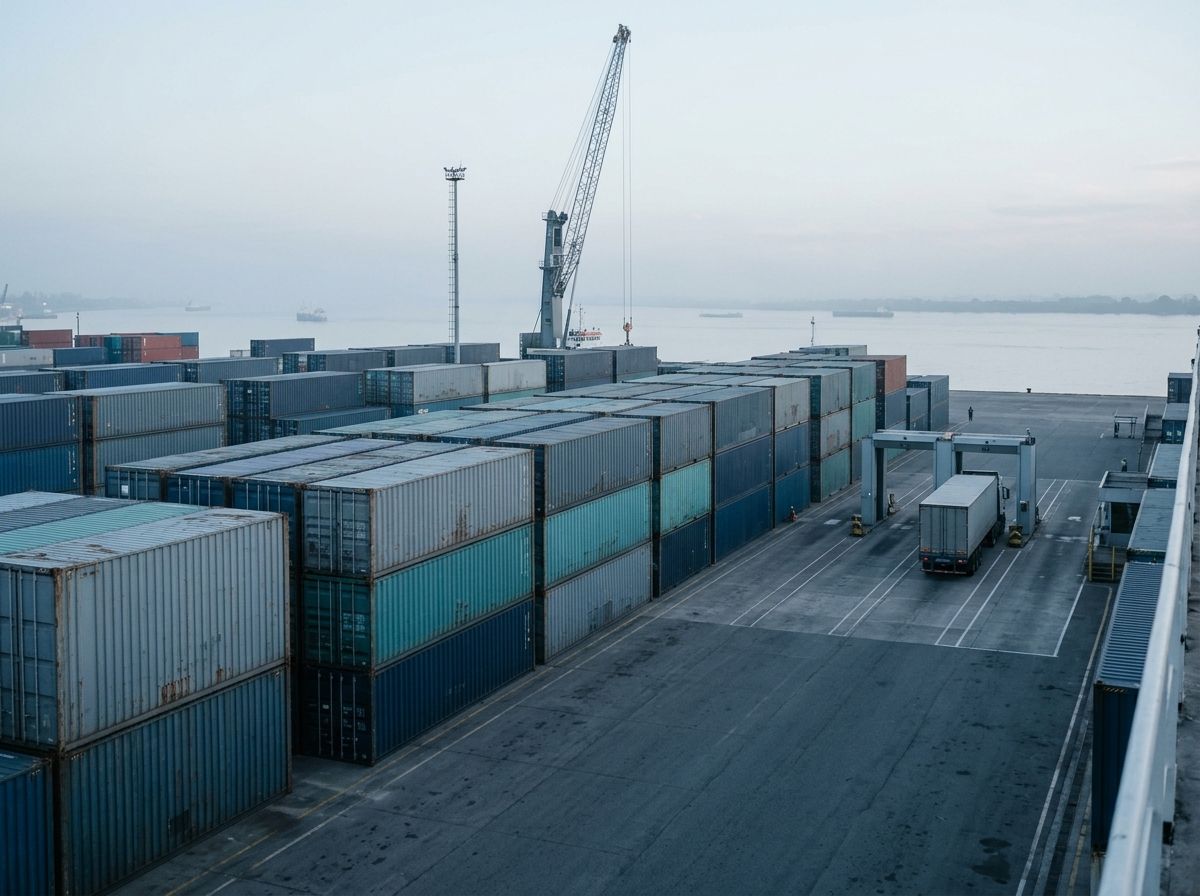
Stacked containers at a port terminal, with a truck waiting in the inspection lane.

What can be expected from the digital channel against smuggling

The different types of informality and illegality also have different levels of traceability and, therefore, different public policy challenges.

Customs control: what the formal market requires, where the gap opens and what information already exists

The certifications that condition the legal sale of products, the controls that no longer apply to courier shipments and the information flows the State could cross-check to detect covert commercial use.

Download
What the formal market requires

OECD PMR indicator

A 0 to 6 scale that measures the distance from international best practice in competition.

OECD PMR score by country
Argentina2014 and 2016
3.11
Mexico2018
2.10
Chile2018
1.58

Argentina has historically maintained one of the most restrictive regulatory frameworks in Latin America in terms of market access.

Five areas with mandatory certification or registration

Selling a broad and heterogeneous set of product categories in the Argentine market requires prior accreditation before specialized technical agencies, whose involvement is a condition of legality and not a mere formality.

  1. Electrical safety

    What it covers
    …electrical equipment listed in its Annex II, including power supplies and chargers, household electrical appliances, lighting devices and electronic, audio and video equipment.
    Rules
    Resolution 16/2025 of the Secretariat of Industry and Trade
  2. Health products

    What it covers
    Medicines, drugs, reagents, pharmaceutical forms, diagnostic items and any product used in human medicine.
    Rules
    Law No. 16,463 · ANMAT Provision 236/2026
    Who is involved:
    ANMAT
  3. Toy safety

    What it covers
    Any product designed for use by children under 14 that is manufactured, imported or distributed in the country.
    Rules
    Resolution 163/2005 · Resolution 313/2025
    Who is involved:
    INTI and certification bodies accredited by the Argentine Accreditation Body
  4. Safety auto parts

    What it covers
    Tyres, brake systems, seat belts, lighting systems and motorcycle helmets, among a total of 22 categories.
    Rules
    Traffic Law No. 24,449 · Decree 196/2025
  5. Telecommunications equipment

    What it covers
    Mobile phones, tablets, laptops, wireless headphones, smartwatches, IoT devices and any equipment that uses the radio spectrum.
    Rules
    Argentina Digital Law No. 27,078 · ENACOM Resolution 57/2026
    Who is involved:
    ENACOM

On top of these categories come plant protection products, agrochemicals and fertilizers, whose registration with SENASA is a necessary condition for their sale.

The courier regime

What ARCA's General Resolution 5884/2026 changed

Maximum value allowed per shipment
USD 3,000 FOB
Limit per shipment
3 units of the same kind

Technical agency interventions that used to work as entry controls

Entry controls on courier shipments before and after General Resolution 5884/2026
Prior ANMAT intervention for cosmetics and personal-use medical devicesBefore: RequiredSince RG 5884/2026: Exempt
SENASA free-circulation certificates for food and supplements imported by individualsBefore: RequiredSince RG 5884/2026: Exempt
Electrical safety certification for electronic devices and type approval of spare parts issued by the Secretariat of Industry and TradeBefore: RequiredSince RG 5884/2026: Exempt

This differentiation could create negative incentives for the general import regime: as long as the certification, type-approval and documentation requirements of formal importation represent significant costs, the simplified regime for personal shipments could be seen as an alternative channel with a lighter regulatory burden.

In this respect, the reform does introduce a mechanism with significant tracing potential, since it requires a mandatory advance declaration through the Universal Postal Union's CDS system.

Data matching

From inspecting parcels to identifying patterns

Information that already exists

  • Mandatory advance declaration (CDS)

    The postal operator must send it to ARCA before the goods physically arrive. It is required by RG 5884/2026.

  • Sales data that platforms already report monthly to ARCA

    • RG 4614/2019 Requires payment aggregators and wallet operators to report seller-level data to ARCA every month (CUIT, CBU or CVU, transaction amounts and fees).
    • Direct exchange between ARCA and Mercado Libre Since March 2026, focused on four high tax-risk categories.

Systematic cross-checking within ARCA

If those two information flows are systematically cross-checked within ARCA, it becomes possible to detect patterns of inconsistency between what a person declares they are importing for personal use and what they might later sell on a domestic platform.

What is missingThe problem is not a lack of data (which already exists through information regimes and specific cooperation mechanisms) but the lack of an analytical architecture that links it.

What it would make possible

  • Detect inconsistencies between what a seller invoices on a platform and what they declare to the tax authority.
  • Identify atypical patterns of commercial behaviour.
  • Segment operators by category, frequency and volume.

Source: Insight LAC, sección 3.3, Contrabando: el rol del Estado y de las plataformas de e-commerce, 2026

Source: OCDE, Panorama de las administraciones públicas América Latina y el Caribe 2020, 2020

Source: ARCA, Resolución General 5884/2026. Régimen de envíos postales, 2026

The challenge is to build the institutional capacity to integrate it with customs and tax records and thus focus enforcement on the highest-risk operators and transactions.

Aerial view of a logistics warehouse with parcels on sorting lines.

3.4 Public policy lines

Legislators at their seats during a session in a legislative chamber.

Four policy lines

Based on the analysis developed in the previous sections, four public policy lines can be identified that could strengthen the contribution of digital commerce to the formalization and transparency ecosystem in Argentina, without regressive effects on the base of small sellers that currently use the channel.

The four public policy lines

Each line answers three questions: what the State gains, what it requires or what costs it entails, and who carries it out.

Download

Line 1

Strengthen customs intelligence by integrating existing information
What does the State gain?
A consolidated capacity to detect inconsistencies between import, sale and tax returns, with a reduction in estimated evasion in the digital channel. The State maintains, and even strengthens, its control capacity, but with a more efficient, risk-based model. It reduces delays at the border, discourages informality and improves traceability.
What is required?
Gradual development of State interoperability infrastructure, governance and information security protocols, risk analysis systems and training for the competent officials. The estimate of the resources needed should consider not only development and integration costs, but also those of maintenance, cybersecurity, data protection, auditing and incident response, as well as the differing capacities of the public and private actors involved.
Who carries it out?
General Customs Directorate and ARCA, with operational coordination with courier operators and the Postal Service, agencies such as ANMAT and ENACOM, and logistics operators as parties.
Read the full proposal

One of the main problems in tackling irregular trade is the capacity to integrate the data that already exists. The information regimes in force (in particular, RG 4614/2019 with respect to the parties expressly covered by it) and certain specific exchange schemes produce flows of transactional information that are currently processed in a fragmented way and are not always systematically integrated with the import records available at the General Customs Directorate. That fragmentation limits the State's ability to build a consolidated picture of the flow of goods from import to final sale, particularly in the courier regime, which combines high volume, low declared unit value and difficulties for systematic control. The advance declaration with the recipient's tax identifier introduced by RG 5884/2026 is an input that, integrated within the State with the information it already receives from the parties obliged under the applicable regimes, could help detect inconsistencies between what is declared as an import for personal use and its eventual subsequent sale.

The recommendation therefore aims to improve interoperability among State agencies with respect to the information they already receive under the regimes in force. Under common protocols on format, purpose, frequency, security and data protection, ARCA, the General Customs Directorate and the competent technical agencies could integrate the information they already hold on importers, sellers, frequency, quantities and transactions to build cumulative risk profiles by CUIT, category and origin. This would make it possible to move from controlling individual parcels to identifying patterns of possible commercial use of regimes intended for personal consumption.

Another problem identified is the requirement, in some regimes in force in Latin America, for the prior consent of the sector regulator, which operates as a condition for customs clearance. This creates a logistical bottleneck that translates into delivery delays, storage costs and a negative experience for the consumer, who in most cases is unaware, at the time of purchase, that a regulatory step is pending; that friction ends up encouraging informal purchasing channels that escape both the technical control of the sector regulator and the fiscal control of the tax authority.

Replacing prior physical control with subsequent electronic oversight, based on the information the system itself already generates, would be a viable solution. In other words, it would be a “sworn statement” to be completed after customs clearance, instead of operating as a precondition for the release of the goods. This option does not remove the requirement to declare the equipment's conformity, but decouples it from the physical flow of goods: registration must be completed before the product is first used, but it can be checked electronically once the parcel has been released, which is precisely the kind of architecture that makes it possible to build cumulative risk profiles instead of intervening in every shipment at the border.

The proposal builds on precedents such as Argentina's “Door to Door” regime, which allows a simplified declaration of contents and online payment of duties between the product's arrival in the country and its final delivery, and the Mexican Official Standards (NOM), which speed up the release of products for personal use once compliance with labelling and information requirements has been verified, without additional discretionary controls at the border.

Implementation conditions. In a first stage, interoperability should be limited to the internal integration of the information that State agencies already receive under the regimes in force. Additional information provided through voluntary cooperation agreements should be used exclusively for the expressly defined purposes.

Every request for or exchange of information should have a sufficient legal basis and respect the criteria of necessity, reasonableness and proportionality. The protocols should identify the data strictly needed, the parties authorized to access it, the permitted purposes, retention periods and the applicable security measures. They should also take into account the economic, technical and operational capacities of the different intermediaries and establish safeguards to protect personal data, tax secrecy, confidential business information, trade secrets and intellectual property rights.

Voluntary agreements should expressly state that they are limited in scope and do not create new liabilities. Any more onerous future obligation would require a specific rule, a prior impact assessment and general, objective and technologically neutral criteria, applicable under equivalent conditions to comparable operators. In other words, a platform's technical capacity to generate or process information should not, on its own, be considered sufficient grounds for imposing new legal obligations on it. In this way, cooperation could strengthen the State's risk management without shifting onto private intermediaries functions that belong to the State's police power.
Line 2

Redefine the incentives that fuel smuggling and grey markets, including tax gaps and disproportionate type-approval or certification barriers, and systematically assess the competitive impact of technical regulations
What does the State gain?
A structural reduction in the economic appeal of parallel markets, efforts focused on the highest-risk categories, improved competitiveness of the formal channel and higher effective tax collection.
What costs does it entail?
Short-term fiscal costs from reviewing tariffs and tax burdens; but an expected net gain in the medium term from broadening the tax base.
Who carries it out?
Ministry of Economy in coordination with ARCA, the Secretariat of Industry and Trade and the technical certification agencies (ANMAT, ENACOM, INTI).

Four concrete mechanisms for the certification system as a whole

  1. Close the regulatory gap between the courier/personal regime and commercial importation.

    Given the difference between the certifications required under the general regime and under the simplified courier regime, there may be an incentive to use a regime designed for personal consumption as a commercial supply route. The policy would not be to indiscriminately tighten the courier regime or to remove all the requirements of the general regime, but to align the incentives between the two: detect habitualness, establish automatic transitions between regimes and prevent the regulatory differential from rewarding splitting. This assessment should cover sales facilitated by foreign platforms and possible shifts towards less traceable channels. Equivalent obligations should be considered for operators performing comparable functions, together with viable cross-border compliance mechanisms and measures adapted to the information actually available in each channel. On the one hand, it is proposed that the “sworn statement” procedure for products for personal use be free of charge, as a principle that should extend to any new procedure involving marketplaces in the issuance of type approval, even under an experimental regime, since, for products with a low unit value, any administrative fee could exceed the value of the product itself, making the formal route unviable and directly encouraging informality; the same principle already operates in the simplified tariff regimes adopted by China and Argentina. On the other hand, it is recommended to keep a personal-use criterion based on quantity and frequency compatible with that purpose (without constituting a commercial act), rather than an alternative that replaces it with a value limit tied to the tax exemption regime. As a complement, it is proposed that displaying the type-approval code, when available, for higher-risk products work as a double-check mechanism, applicable only to the range of products that actually warrants monitoring by the regulatory authority.

  2. Ensure mutual recognition of authorizations issued by accredited agencies in international benchmark markets,

    which eliminates duplicate technical testing for products already certified in jurisdictions with equivalent standards.

  3. Assess opening the certification process to multiple accredited bodies,

    breaking up the de facto institutional monopolies that concentrate the procedure in a single State or professional actor and create bottlenecks with direct effects on the costs and time of market access.

  4. Seek to ensure that every relevant type approval, certification, authorization or technical restriction periodically includes an assessment of its necessity, proportionality and effects on competition and prices.

    This does not mean eliminating safety standards, but identifying when a regulation ends up creating barriers to entry or exclusivity rents that feed parallel markets. A complementary policy is to eliminate mandatory periodic renewals for products that have undergone no technical changes, which impose recurring costs with no added safety value. At the regional level, the asymmetry of tax burdens and technical requirements between Argentina and neighbouring countries is a structural factor that no domestic policy can neutralize on its own. In that context, it is appropriate to promote dialogue within Mercosur aimed at the progressive convergence of technical standards and certification requirements for the product categories most affected by irregular trade. One case that illustrates this practice is the possible creation of a new category for imports for personal use: a “very-low-risk category” for telecommunications equipment. Rather than simplifying the type-approval procedure, the proposal is to eliminate it altogether for a limited range of products whose risk of harmful interference is, in practice, negligible, as with low-power mice and keyboards. Many of today's telecommunications products use mature, standardized radio-frequency technologies, for which even a simplified certification procedure represents disproportionate administrative friction given its nil contribution to risk management. Several precedents in comparative law support this logic: the US Federal Communications Commission (FCC) exempts products for personal use from formal type approval and Peru exempts certain low-power devices from approval, while Brazil's own technical metrology body (INMETRO) already recognizes exempt categories when use is exclusively private, which confirms that this kind of proportionality-based exemption is not an isolated idea but a regulatory trend already established in different jurisdictions.

Read the full proposal

From the standpoint of institutional economics, informality and smuggling can be explained as rational responses by economic agents to incentive structures. When the price differences stemming from the regulatory framework exceed the expected costs of operating through alternative channels, the economic appeal of parallel markets increases. Consequently, the existence of these circuits cannot be attributed solely to enforcement failures, but also to the incentives created by regulatory design itself. In this sense, no control strategy will be fully effective unless it simultaneously addresses the structural conditions that drive operating outside the formal channel. Certification and type-approval processes, when excessively costly or lengthy, act as a barrier to entry that widens the price gap between the formal channel and alternative circuits, feeding back into the incentive for regulatory arbitrage. The recent trend towards simplification and recognition of international certifications is a step in the right direction, but its implementation is still fragmented.

Line 3

Support for the formalization of small sellers
What does the State gain?
A broader formal tax base, higher Monotributo and social security contributions, and better knowledge of real economic activity.
What is required?
Development by ARCA of simplified procedures and official assistance materials. Any collaboration by platforms should be voluntary, limited and compatible with their technical and operational capacities.
Who carries it out?
ARCA, with the possible voluntary participation of e-commerce platforms and coordination by the Ministry of Human Capital regarding entrepreneur support programmes.
Read the full proposal

International evidence on reducing economic informality in Latin America shows that the most effective instruments combine productivity improvements, regulatory simplification, economic incentives and a gradual enforcement capacity. Within that framework, ARCA could develop simplified assistance mechanisms for sellers who reach the habitualness thresholds, reducing the administrative cost of first registration and making the corresponding procedures easier to access. Platforms could collaborate voluntarily by sharing general information, reminders and links to official channels, where technically and operationally feasible.

This collaboration should not include verifying sellers' compliance or general monitoring of their transactions, nor require collecting or communicating information beyond what the applicable regimes require and what is needed to achieve the intended purpose.

Line 4

Building a permanent monitoring system for digital commerce and formalization
What does the State gain?
A solid empirical basis for designing and evaluating public policies on e-commerce, informality and competition; internationally comparable information.
What is required?
Strengthening INDEC's capacities and updating existing economic activity surveys.
Who carries it out?
INDEC, with the possible voluntary participation of ARCA, CACE and other private actors, within the limits set by the applicable regimes.
Read the full proposal

A central limitation of the Argentine public debate on e-commerce and informality is the absence of official data to estimate what share of informal trade is currently channelled through digital platforms, social networks or street fairs, and how that distribution evolves over time. Without that data, any estimate of the impact of a regulation on formalization is conjecture. In 2023 the OECD, UNCTAD, the IMF and the WTO jointly developed a Handbook on Measuring Digital Trade that offers a standardized methodological framework for national statistical offices to incorporate digital trade into their national accounts and economic activity surveys, including specific guidance for capturing platform activity and the conversational channel. A concrete policy line could be to commission INDEC to produce an annual estimate of the distribution of retail trade by channel, following the methodology of the joint OECD-UNCTAD-IMF-WTO handbook and relying primarily on statistical and administrative information that is already available. Any collaboration by ARCA, CACE, platforms or other private actors should be voluntary and based on aggregated or anonymized information, under criteria of specific purpose, minimization, confidentiality and security. That collaboration should not grant general access to individual transactional data.

  • In charge
  • In coordination, cooperation or voluntary participation
Agencies and actors that carry out each policy line, according to the report
Agency or actorStrengthen customs intelligenceRedefine the incentives that fuel smuggling and grey marketsSupport for the formalization of small sellersBuilding a permanent monitoring system for digital commerce and formalization
ARCAIn chargeIn coordination, cooperation or voluntary participationIn chargeIn coordination, cooperation or voluntary participation
General Customs DirectorateIn charge
Ministry of EconomyIn charge
INDECIn charge
ANMATIn coordination, cooperation or voluntary participationIn coordination, cooperation or voluntary participation
ENACOMIn coordination, cooperation or voluntary participationIn coordination, cooperation or voluntary participation
Secretariat of Industry and TradeIn coordination, cooperation or voluntary participation
INTIIn coordination, cooperation or voluntary participation
Ministry of Human CapitalIn coordination, cooperation or voluntary participation
E-commerce platformsIn coordination, cooperation or voluntary participation
Argentine E-commerce Chamber (CACE)In coordination, cooperation or voluntary participation
Other private actorsIn coordination, cooperation or voluntary participation
Courier operatorsIn coordination, cooperation or voluntary participation
Postal ServiceIn coordination, cooperation or voluntary participation
Logistics operatorsIn coordination, cooperation or voluntary participation

Source: Insight LAC, sección 3.4, Contrabando: el rol del Estado y de las plataformas de e-commerce, 2026

Frequently asked questions

Who produced the report?

The report is by Insight LAC and is titled “Contrabando: el rol del Estado y de las plataformas de e-commerce” (Smuggling: the role of the State and e-commerce platforms). Its authors are Ana Basco and Paula Garnero, directors of Insight LAC, and Lautaro Ramirez, associate at Insight LAC.

Where does the data come from?

From public and industry sources that the report cites in every chart and footnote: CACE, INDEC, ARCA, UNCTAD, the Central Bank of Chile, Worldpay and ASIPI, among others. On this site, every chart and figure shows its source.

How was e-commerce penetration estimated?

The report's methodological annex details the calculation: it starts from the ratio between gross output and sales in the trade sector according to INDEC's supply and use tables, applies it to the revenue declared to ARCA to estimate formal retail sales, and on that basis computes the ratio to the e-commerce revenue reported by CACE. The report itself warns that the result overstates penetration, because the denominator is built on tax records and leaves out informal trade. See the full methodology

Read the full report

Including the methodological annex and the source of every series. The report is published in Spanish. See the full methodology

Data, charts and logo for the press

Report details

Publisher
Insight LAC
Authors
Ana Basco, Paula Garnero, Lautaro Ramirez
Edition
2026
Length
64 pages
Format
PDF
Size
2.8 MB
Text size